


Volunteer Blog: Line
February 9, 2024
Volunteer Blog: Julius
February 17, 2024The Great Green Macaw reintroduction project in Costa Rica’s South Caribbean, Ara Manzanillo, has successfully repopulated the area with over 100 magnificent critically endangered Ara ambiguus. The Assisted Reproduction Program began in 2016 and presently maintains 27 artificial nests in select rainforest trees.Developing and monitoring nests and rescuing at
risk macaw chicks demand dynamic strategies.
During breading season, nest-monitoring is a
fulltime job. We prefer not to interfere with the
natural reproductive process, however, Great
Greens are so critically endangered that
increasing the free-flying population takes
priority. If we determine that a runt chick of a
brood would not survive without assistance, we
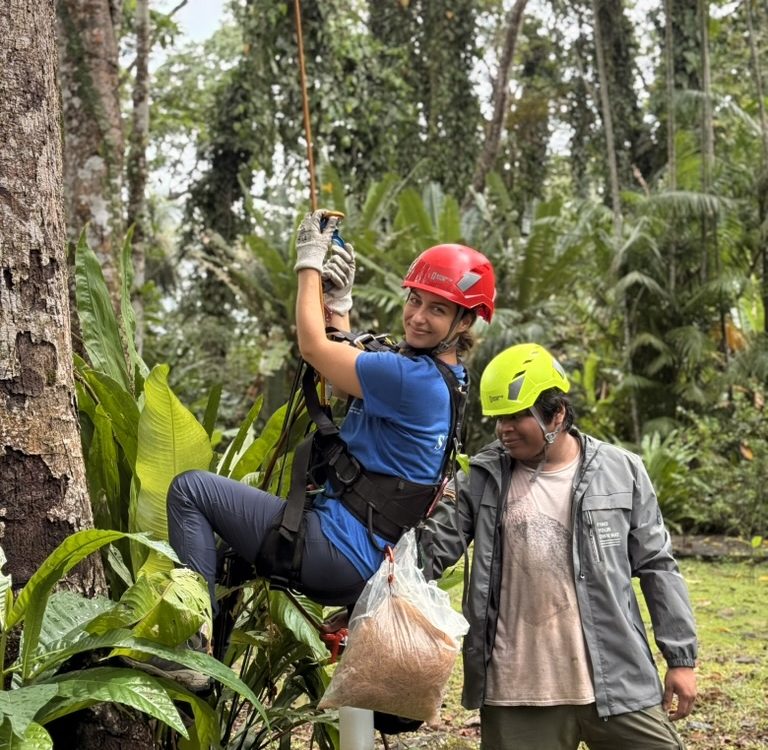
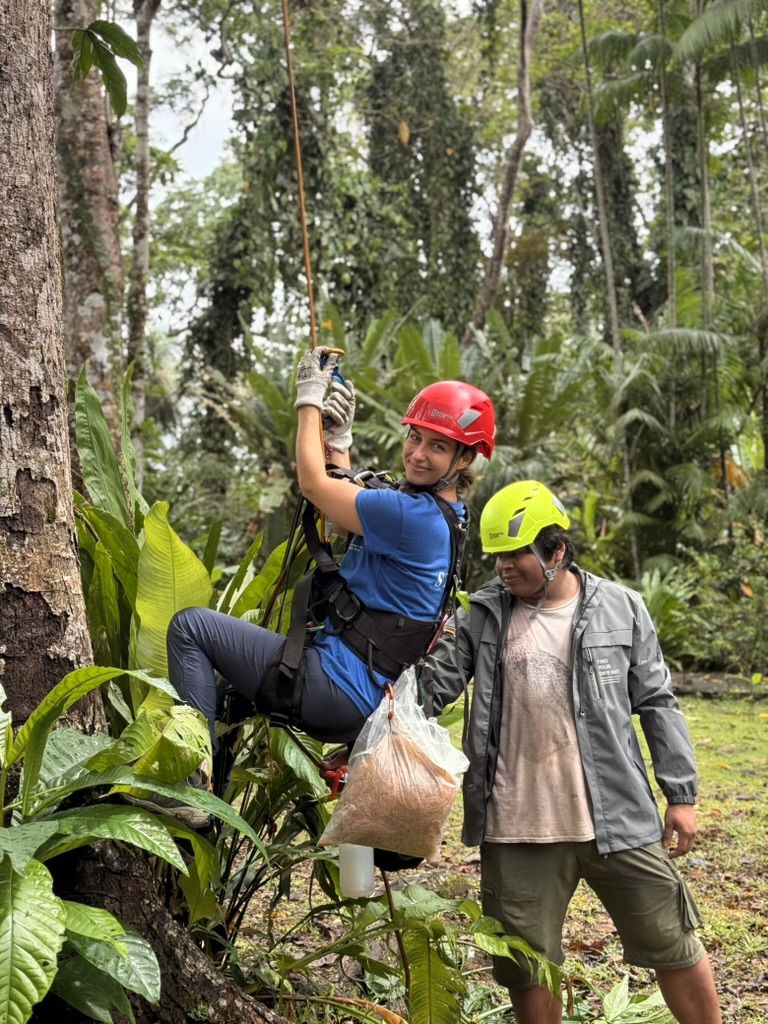
either climb the tree daily to feed the runt inside
the nest, or must relocate chick to a brooding box
for days of supplemental feeding before returning
to nest. This significantly increases reproduction
survival rate.

Volunteer checks nest as mother carefully guards

Lore being hand fed and returned to nest
This year, once again Mick and Sneezy had triplets
with 1 smaller chick days younger. We initially provided formula inside the nest, but climbing up and down 25 meters twice daily was not viable. The runt “Lore” was brought down to feed every few hours for 10 days and although it grew in size and strength, the siblings had also grown and dominated for parents’ food, leaving Lore with an empty crop.
To avoid hand raising Lore for a year inside the aviary, we sought an adoption. Fortunately, the nest closest to the field station had only 1 younger
chick and we placed Lore into a new family. Initially, Lore did not receive food and for 3 days volunteers climbed twice a day with food. We were ready to give up, when much to our surprise, on the 4th day Lore had a full crop!While still monitoring the nest, we are
delighted to observe both Lore and new
sibling cared for and growing together.