


Visit Ara Manzanillo ~ make a reservation
Ara Manzanillo 2024 In Review
As 2024 draws to a close, we reflect on a positive year of progress for the reintroduced Great Green Macaws flying free in the skies of Caribe Sur, Costa Rica.
Thanks to your support, we’ve been able to expand our conservation efforts, enrich the local ecosystems and inspire communities to connect with Nature and take action.


2024 in Numbers
2,000+
Students Engaged via
Educational Outreach
19
Amazing Volunteers
114
GGMs Flying in Caribe Sur
100+
Climbed Trees
to Check Nests
500+
Trees Planted in '23-'24
6
Chicks Hatched
in Nest Boxes
Great Green Macaw Reintroduction

Collaborating for Conservation
A key part of our mission at Ara Manzanillo is to reintroduce Great Green Macaws (GGM) to Caribe Sur. Now that the birds have been reintroduced, this involves securing their habitat corridor. As the Gandoca-Manzanillo Wildlife Refuge boarders Panama, transborder collaboration is vital. Our partnership with Panama Wildlife Conservation has blossomed this year.
Panama Wildlife Conservation has visited and hosted us to establish an assisted breeding program in Cerro Hoya, Panama, to practice constructing, installing, and monitoring GGM nest boxes. Providing safe breeding cavities for chicks who are the most vulnerable and critical stage of growing a population.Rewild Argentina also visited us this year to learn about our nest box program and adapt it to their own work with red-and-green macaw (Ara chloropterus) in Iberá, as the two species share similar nesting habits. We are eager to build upon these growing collaborations and refine the best practices for parrot well-being as a united force.
While we celebrate these efforts, we also reflect on a sad note. A cherished member of Panama Wildlife Conservation’s team, and a new friend to us, Francisco Dominguez, passed away. His gregarious laugh, constant smile, and indelible impact on our team will never be forgotten.

Assisted Breeding Program
Growing the Flock
This year our assisted nestboxes brought six more chirping chicks to Caribe Sur - welcoming in birth order: Barbosa, Namü, Carrot, Jupiter, Lis, and Eddie. These juveniles are thriving, with their vibrant squawks echoing through the jungle.
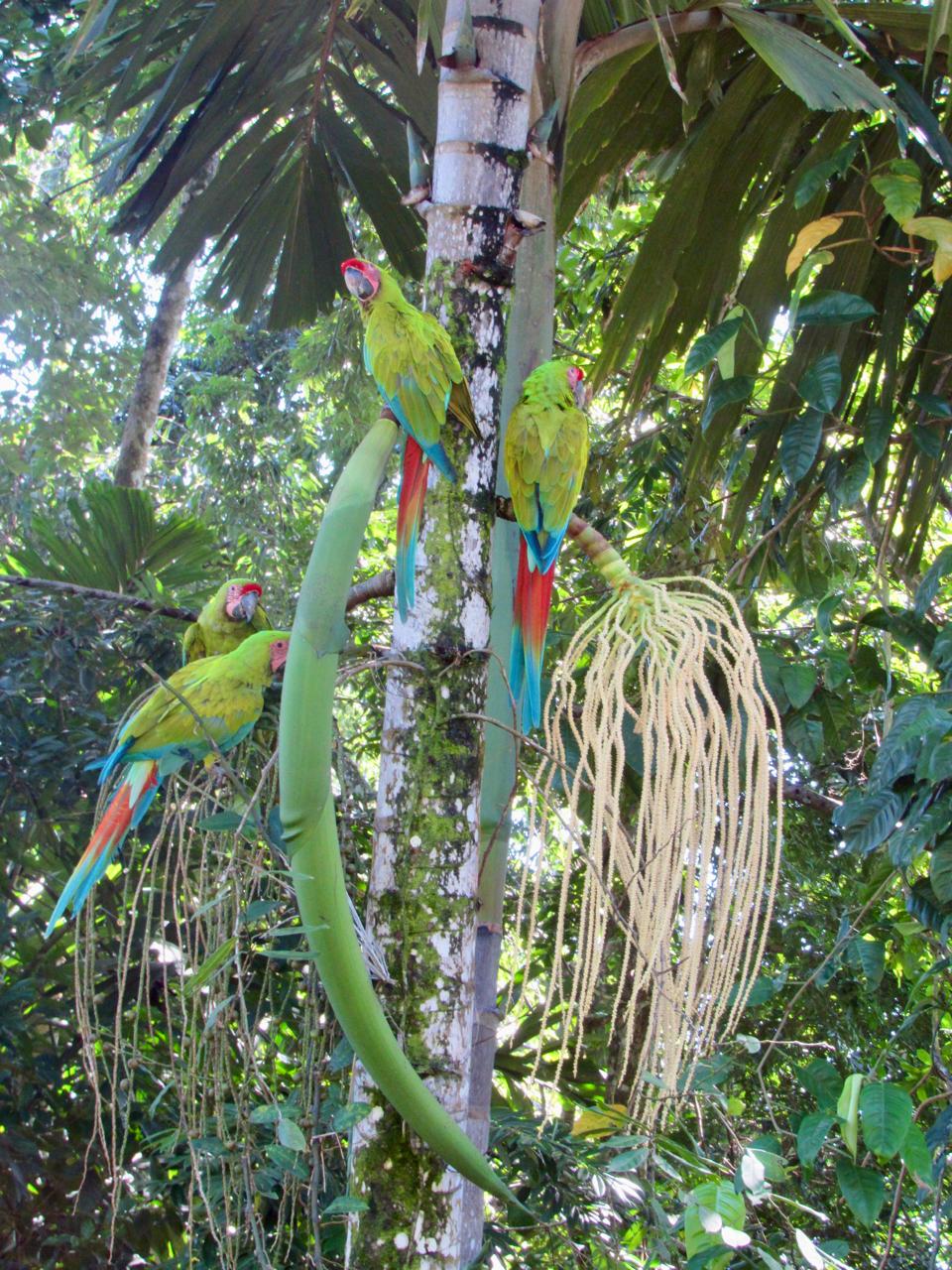
In the wild, GGM parents dedicate an entire year (sometimes two) to nurturing their young, teaching them to forage, fly, and adapt to the challenges of life in the rainforest. We’re optimistic that these fledglings are quickly learning and are ready to embrace the jungle on their own. A breathtaking spectacle unfolds every August through October at Ara Manzanillo as the GGMs regroup to incorporate their juvenile into the flock and prepare for the next breeding season. Young GGMs, around 5 to 7 years old, begin forming lifelong bonds with their mates. Though not necessarily breeding the first year, the new couples fly together and check out potential nesting cavities . Witnessing 20 to 40 of these majestic birds fill the skies is nothing short of magical.Challenges Amidst Celebration
While these successes bring hope, this past year presented challenges. Predators—monkeys, kinkajous, snakes, and toucans—have become increasingly adept at locating nest boxes, drawn by the scent of GGM eggs. Tragically, predation rates were higher than we've ever seen.
For example, Mick and Sneezy, two dedicated GGM parents, lost their first three clutches to predators despite our best efforts to secure the nests. Their resilience, however, resulted in the survival of their final brood, chicks Lis and Eddie. To prevent further losses, we are exploring nest box modifications to better protect eggs and chicks.
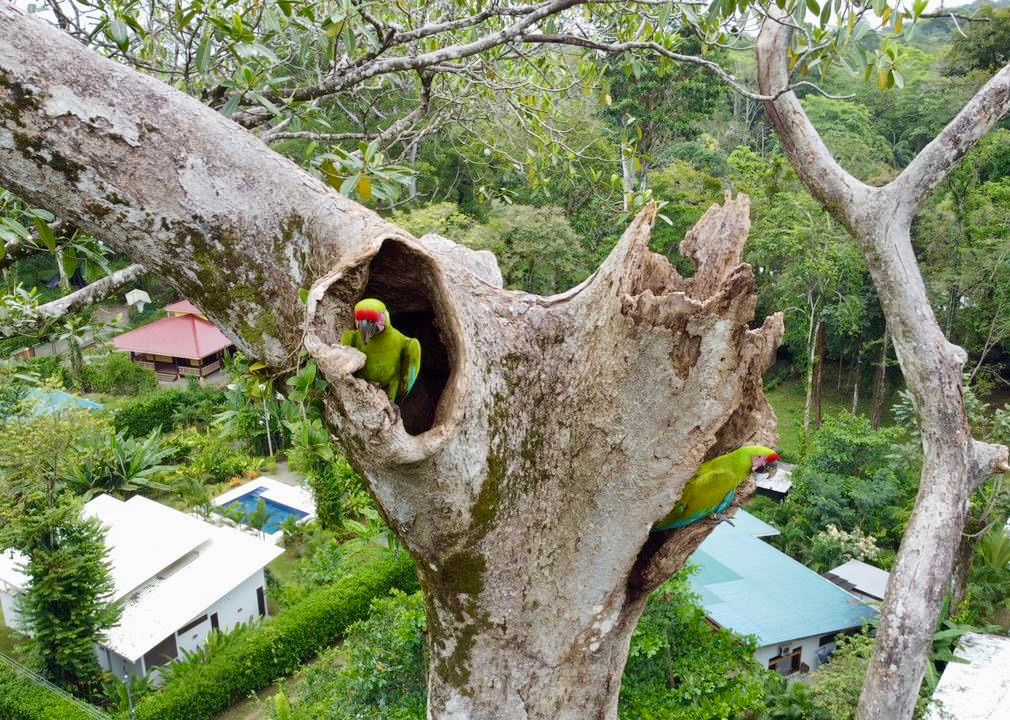
Encouragingly, we’re also seeing more couples choose natural nests—a development that brings both joy and challenges. Our goal is a self-sustaining wild population free of human intervention. Yet, we recently rescued two chicks without identification bands, highlighting that while GGMs are reproducing independently, some chicks still struggle to fledge successfully.
One such chick, Gus, is now in our aviary, honing his flying and foraging skills. While replicating the critical first year of parent-led training in captivity is difficult, we remain optimistic about Gus’s release in March and the potential for similar success stories.
This reality underscores why GGMs remain critically endangered. By addressing these interconnected challenges—through habitat restoration, nest box innovation, and ongoing monitoring—we strive to establish a thriving, self-sustaining GGM population. A population that flourishes independently, enriching the rainforest’s biodiversity for generations to come.
Reforestation Program
