

Visit Ara Manzanillo ~ make a reservation
Establishing a New Population

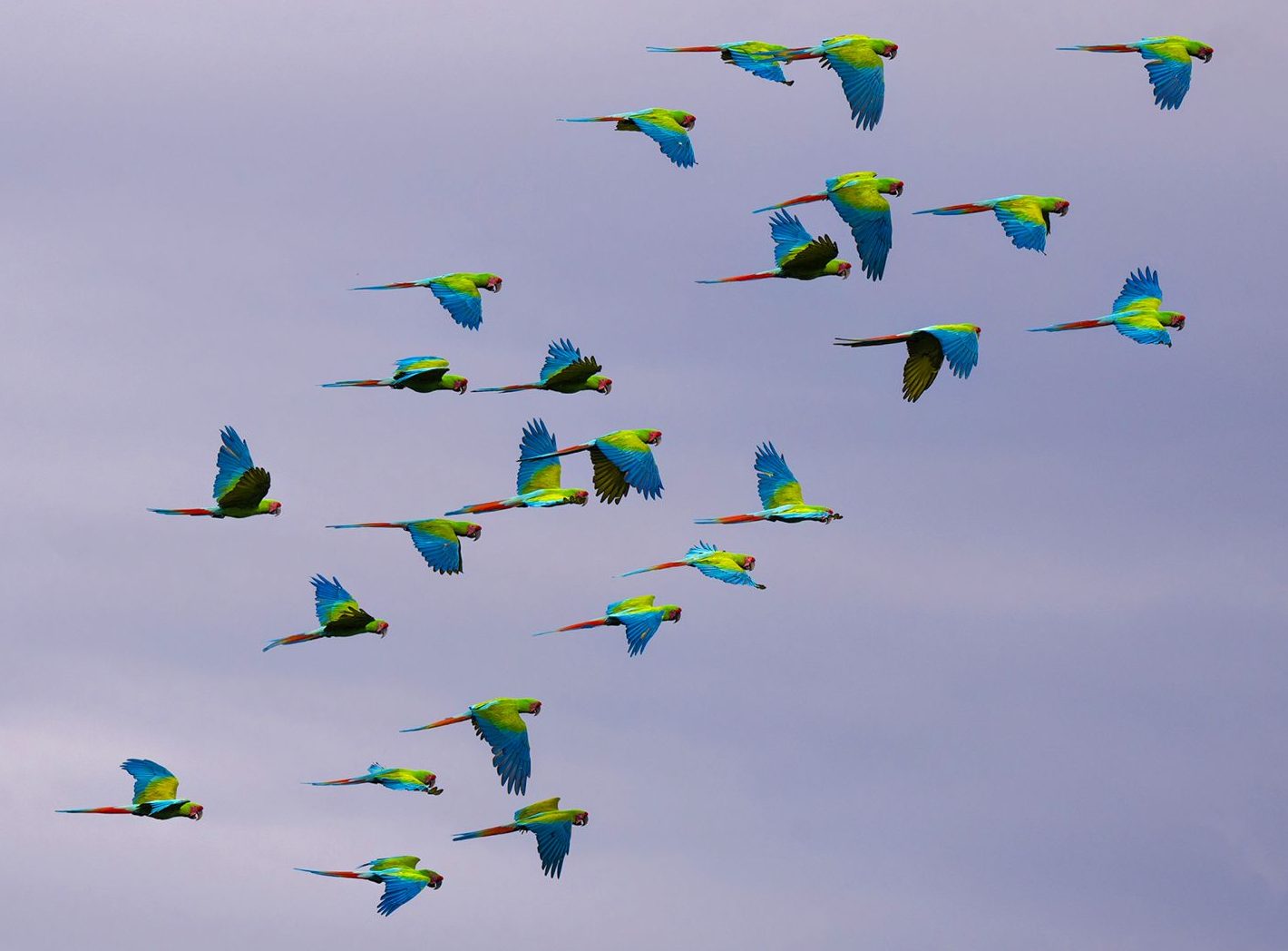
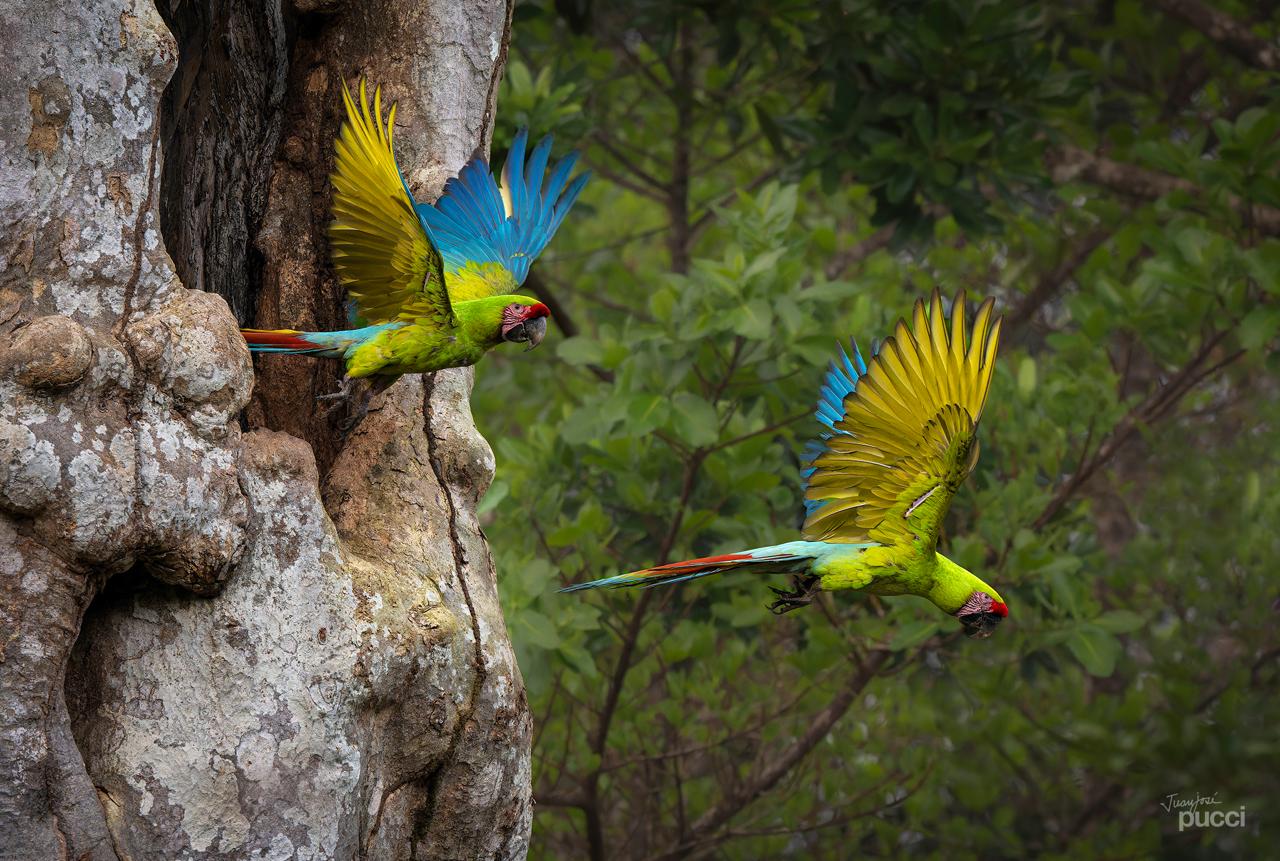
Beginning in 2010, Ara Manzanillo has worked to establish a Great Green Macaw (Ara ambiguus) population to Talamanca, Costa Rica. The species’ population was nearly regionally extinct prior to Ara Manzanillo’s efforts, leading the reintroduction program to utilize a “soft release” protocol that allowed macaws to gradually acclimate to their surroundings before release.
Forty-five selected Great Green Macaws entered a 30-day quarantine to undergo regular health checks and disease testing before being brought to the release station. They were housed in a large flight aviary, where they spent a minimum of two months becoming gradually accustomed to their new surroundings and learning how to identify and consume naturally occurring foods.
Once the birds learned to forage and demonstrated the ability to crack native foods, small groups were released over a two-year period.
The reintroduction has been remarkably successful, with the local population now estimated at approximately 150 Great Green Macaws — representing nearly 15% of the global population. Supplemental feeding of natural foods (such as beach almonds) is provided via high-hanging feeders near the release site, which also allows staff to monitor the birds’ overall health and wellbeing.
Assisted Reproduction Program
Reproduction in the wild is a challenging endeavor for Great Green Macaws. Around five to six years of age, birds reach breeding maturity and begin seeking a lifelong mate. Their preferred nesting sites are natural cavities formed by broken branches high in mountain almond trees (Dipteryx panamensis). Successful reproduction is a critical component in establishing a healthy, self-sustaining population in the wild.
Mountain almond trees are themselves endangered, and decades of deforestation have drastically reduced their numbers. As a result, suitable nesting cavities are increasingly scarce, creating a significant bottleneck for successful breeding and limiting natural nesting opportunities for Great Green Macaws.
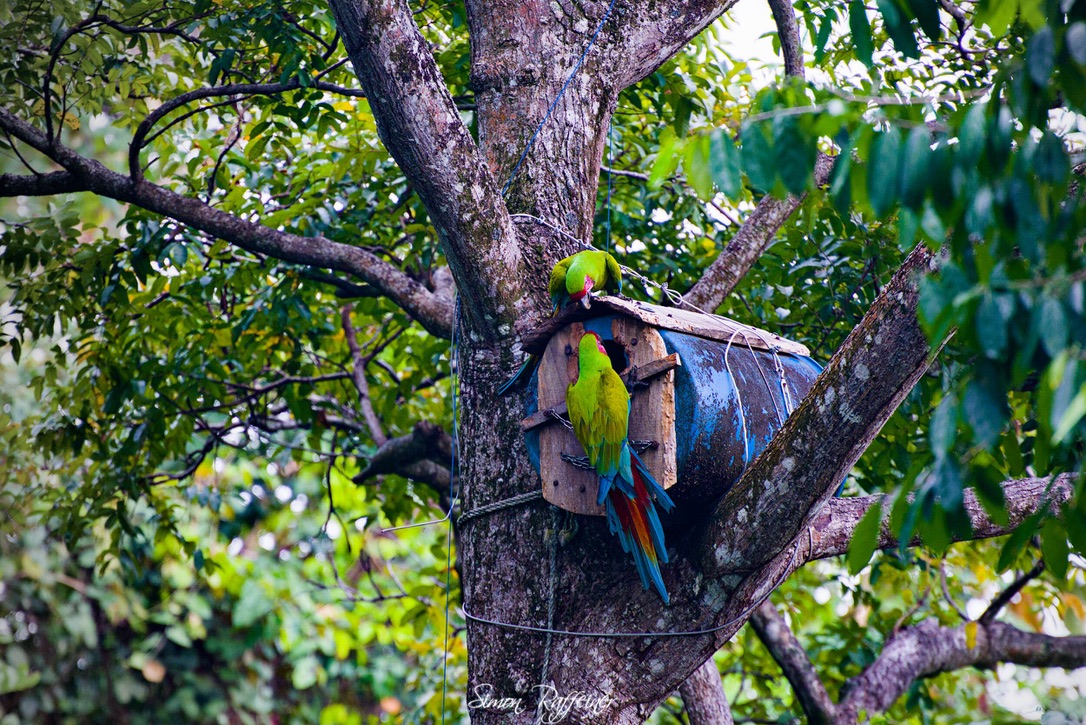
Because safe and adequate nesting sites are so difficult to find, Ara Manzanillo has developed a unique nesting program to support the reintroduced population. To date, we have installed 28 artificial nest boxes throughout the region, with eleven hosting annual returning breeding pairs.
The success of these nest boxes has been significant. Since the program began in 2015, more than 180 eggs have been laid, resulting in 100 successfully fledged chicks. Though not every egg hatches into a chick, we have an 80% success rate with each hatchling becoming a successful fledging.
In the wild, Great Green Macaw chicks have only a 20% chance to survive from egg to fledging. Competition between siblings can further reduce those odds. Eggs and chicks are vulnerable to many rainforest predators, including toucans, aracaris, hawks, monkeys, snakes, weasels, and other carnivorous animals. Natural cavities are also susceptible to heavy rainfall, which can threaten nest success.
We continue to learn, experiment, and adapt nest box designs to better protect against predators and environmental challenges, while refining interior materials to ensure the health and well-being of parents, eggs, and chicks.
Nest boxes are placed at least 100 meters apart to minimize competition and territorial conflict between breeding pairs. The boxes are distributed across an eight-kilometer radius from the station, with most installed more than 25 meters high and securely attached to tree trunks.
Installation is a demanding, three-person operation, and macaws typically take possession of new nest boxes within a few weeks. While we strive to minimize human interference and leave nests largely undisturbed, staff periodically climb the trees to inspect nest interiors and band each chick with an identification band.

Community Outreach Program
The survival of the Great Green Macaw in the region largely depends on human understanding of its ecological and cultural value. For this reason, Ara Manzanillo places a strong emphasis on community outreach and environmental education.
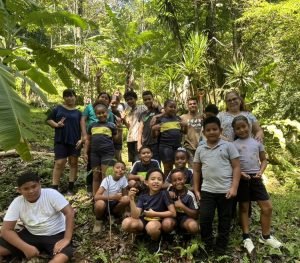
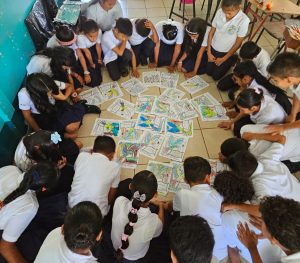
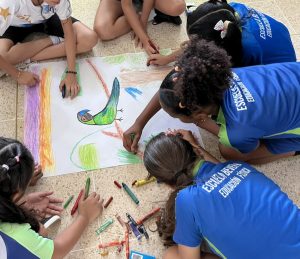
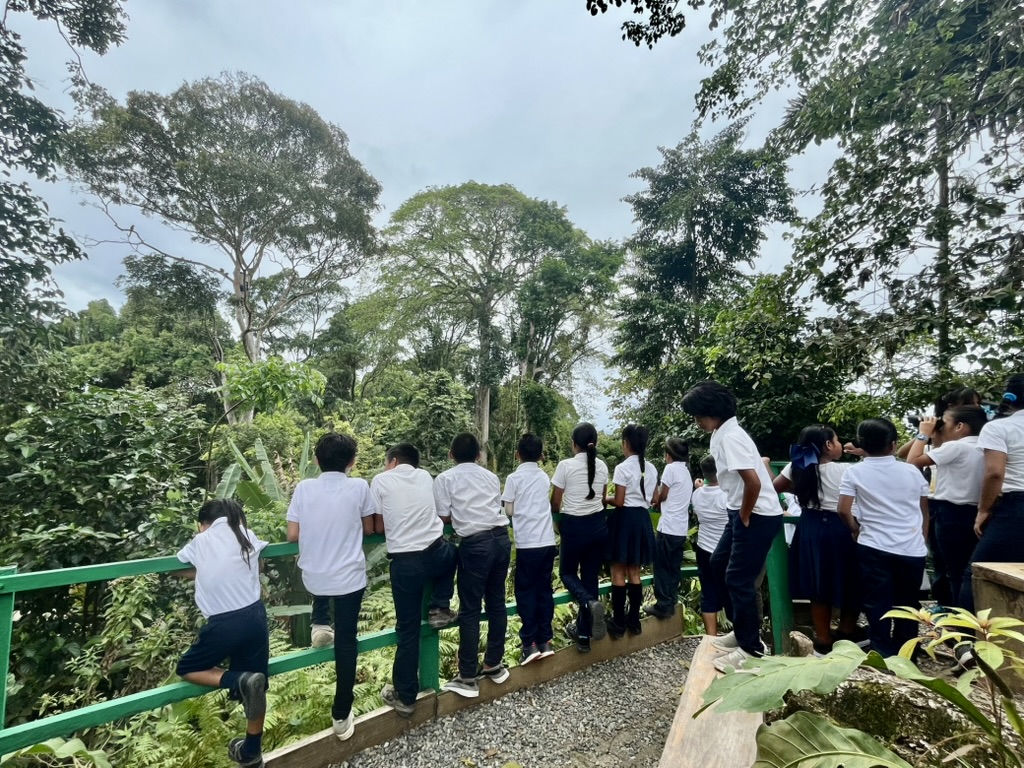
In collaboration with the Ministry of Environment (MINAE) and the Ministry of Education (MEP), we have developed an active education program that includes workshops, classroom activities, and site visits with local schools. To date, more than 5,000 children from across the Southern Caribbean Talamanca region have participated in our environmental education initiatives, learning not only about the importance of Great Green Macaws, but also about the habitats that support them and countless other species.
Beyond schools, Ara Manzanillo maintains a strong presence within the broader community. We regularly participate in local parades, festivals, conservation conventions, and public events, while also coordinating joint activities with other NGOs and key partners. Our involvement in national conservation and sustainable development initiatives helps build widespread support for the recovery of this emblematic species. To date, the organization has participated in more than 300 environmental protection activities and workshops at both community and national levels.
In order to continue to promote understanding of and support for the conservation of this magnificent bird, Ara Manzanillo has published a children’s book, Pewe, coloring pages, and a construction manual for building and installing nests for Great Greens in the wild, both publications are available in our News and Media link.
To request a higher resolution version of Pewe that is better suited for printing, please contact info@aramanzanillo.org.Reforestation and Rainforest Enrichment Program
Tropical rainforest are the Great Green Macaws natural habitat, thus it’s maintenance and conservation are of vital importance for the continued survival of the species. Deforestation of habitat is determined to be the leading cause (80%) of Great Green Macaw endangerment.
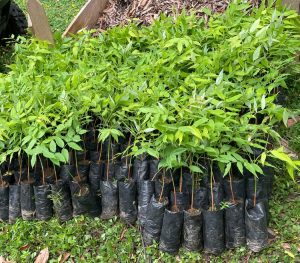
In 2022, Ara Manzanillo has initiated Reforestation Program to enrich the surrounding habitat with valuable food sources. Ara Manzanillo is located on a 38 hectares of biological station, and is the pilot sample to best increase the production of native food for the macaws and wildlife in general.
To date, we have planted over 500 selected species throughout our property. While the number is not staggering, this is because our property is already rich in biodiversity – the aim for us is adding more specific food sources for wildlife.
Mountain Almonds (Dipteryx panamensis) are the primary nesting and feeding site for Macaws. The tough seed is the most nutritious wild food source for the Great Greens and many other animals, so this has become our primary focus in replanting.
Mountain Almond trees can live up to 800 years, the tree grows slowly. It can take 20 years for saplings to produce seed, so our reforestation is planting seeds for the future generations, in addition to quicker growing trees, like Beach Almonds (Terminalia catappa) to promote a more timely food supply.